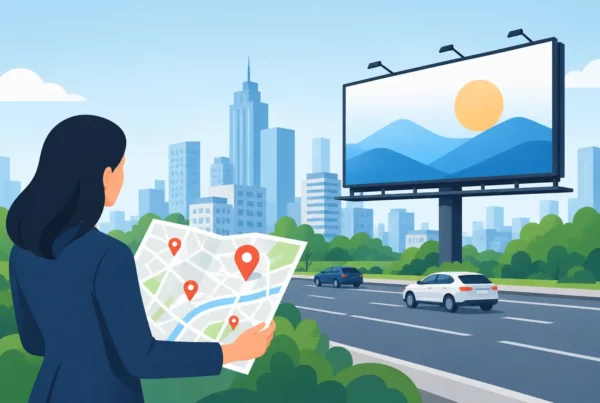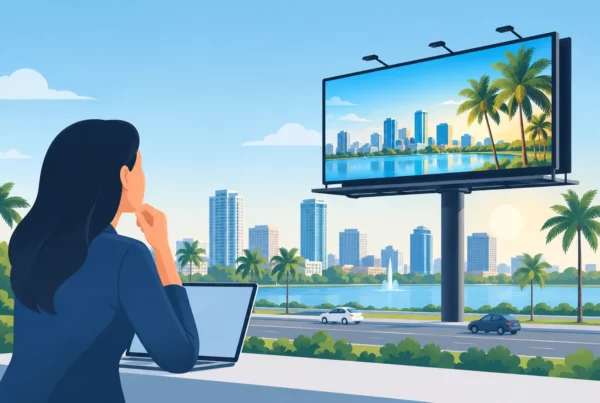
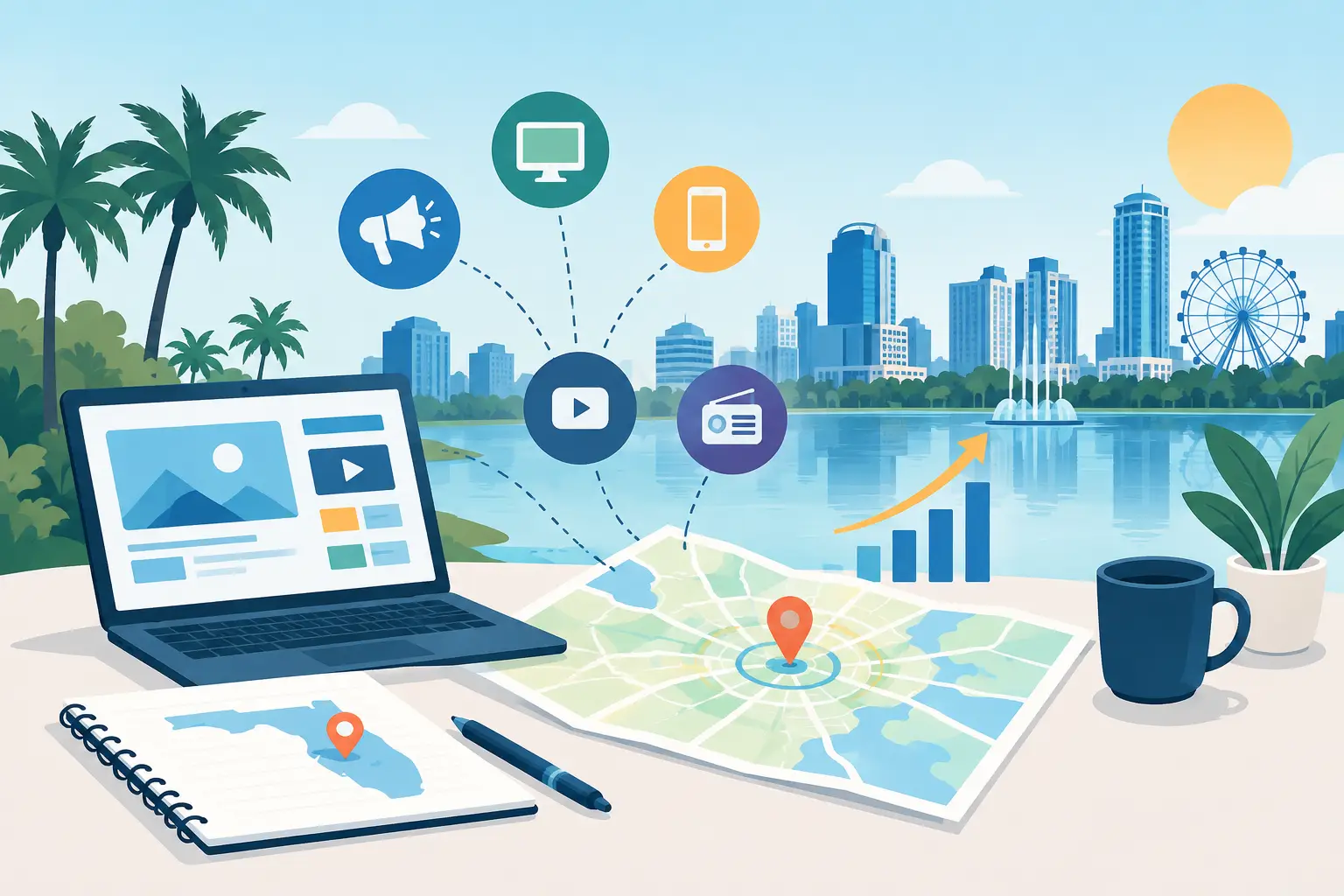

Central Florida is not one audience moving in one direction. A family heading to a theme park, a commuter on I-4, a retiree running errands in Ocala, and a shopper traveling between Lakeland and Winter Haven all move through the market differently. A strong central florida media planning guide starts with that reality: growth comes from putting a clear message in front of the right people, often enough, in the places that matter to your business.
For companies competing for local attention, media planning is more than choosing channels and setting a budget. It is the process of matching your service area, customer behavior, campaign goal, and message to media that can deliver sustained visibility. When done well, it turns advertising from a collection of placements into a coordinated plan built to create recall and drive action.
Start With the Business Result You Need
The best media plan begins before anyone selects a billboard, digital platform, radio station, or television schedule. First, define what success should look like. A new location may need broad awareness. A healthcare provider may need to own a specific service area. A franchise group may need consistent visibility around several markets. A regional brand may need to support a product launch while keeping its name familiar between campaigns.
Your objective affects every decision that follows. If the goal is brand awareness, prioritize reach and repeated exposure. If the goal is traffic to a retail location, focus on the travel routes and nearby destinations your likely customers already use. If you are promoting a limited-time offer, timing and a direct call to action become more important.
Avoid trying to ask one campaign to do everything. A billboard can build strong awareness, credibility, and top-of-mind consideration, but it works best when the message is simple. Search, social, direct mail, and other channels can capture different types of demand. The right mix depends on your sales cycle, geography, budget, and how quickly customers typically make a decision.
Map the Central Florida Audience, Not Just the Market
“Central Florida” is a useful market label, but it is too broad to serve as a media strategy by itself. Orlando has a dense mix of residents, tourists, students, employees, and convention visitors. Davenport has fast-growing residential communities and heavy visitor traffic. Lakeland and Winter Haven connect local households, commuters, and major transportation corridors. Ocala and Sebring each bring their own travel patterns, trade areas, and consumer rhythms.
Start by identifying the ZIP codes, cities, neighborhoods, or corridors that produce your best customers. Then ask practical questions: Where do they live? Where do they work? What roads do they take? What destinations do they visit before they need your product or service?
This matters because proximity is not always the same as relevance. A business located near a highway may benefit from a high-traffic display nearby, but a business with customers willing to travel 20 or 30 minutes may need coverage across several routes. A home services company may need market-wide recognition. A restaurant or urgent care center may need concentrated coverage close to a specific location.
Look at traffic behavior and dwell time
High traffic is valuable, but raw traffic counts are only part of the equation. Consider who is in those vehicles, whether they are traveling toward your business area, and how often they see the location. Daily commuter routes can build frequency over time. Roads near shopping, entertainment, hospitality, and residential growth can connect with people in an active buying mindset.
Digital billboards can add flexibility when a campaign needs timely creative or multiple messages. Static billboards create a constant, uninterrupted brand presence. Neither format is automatically better. The right choice depends on how much message flexibility you need, the locations available, and the role outdoor media plays in the full campaign.
Build Reach and Frequency Into the Same Plan
Reach is the number of people who have an opportunity to see your message. Frequency is how often they have that opportunity. Both matter, especially in a crowded market where consumers are exposed to countless marketing messages every day.
A one-time impression rarely changes behavior. Repeated exposure helps a brand become familiar, and familiarity can make a business easier to remember when a need arises. That is a major advantage of out-of-home advertising: the message is part of the consumer’s real-world routine, visible during commutes, errands, travel, and daily movement.
A common planning mistake is spreading a limited budget across too many disconnected areas. Broad coverage can be useful for a large regional brand, but it can weaken frequency if the schedule is too thin. Conversely, concentrating entirely on one corridor may leave valuable customer zones uncovered. The best balance depends on your target footprint and campaign duration.
For many local and regional advertisers, a multi-location plan creates better market presence than one isolated display. It can surround priority areas, reinforce major travel routes, and keep the brand visible throughout the customer journey. For a tightly defined local business, one premium location with strong relevance may be the smarter investment.
Choose Locations That Support the Customer Journey
Every billboard location should have a job. Some displays introduce a brand to a broad audience. Others reinforce awareness near a store, office, dealership, or service territory. Others help capture the attention of travelers entering a market or moving toward a high-value destination.
Consider these questions before selecting inventory:
- Does this location reach the audience most likely to buy from us?
- Is the direction of travel useful for our business?
- Will people see the message repeatedly during the campaign?
- Does this placement complement our other selected locations?
- Is the viewing environment right for the message we want to deliver?
For example, an Orlando business targeting residents may want a different plan than a brand focused on visitors. A tourism-facing advertiser may prioritize routes near hotels, attractions, airport traffic, and entertainment districts. A local contractor may gain more from commuter routes near established and growing residential areas. The location should reflect the customer, not simply the biggest available impression number.
Make the Message Easy to Absorb
Outdoor advertising has a clear rule: people should understand it quickly. Drivers and passengers do not have time to process a long list of services, a dense paragraph, or several competing calls to action. The creative should establish who you are, what you offer, and why someone should care in a matter of seconds.
Strong billboard creative usually relies on a single focused idea. Use a recognizable logo, high-contrast color, readable type, and imagery that supports the message instead of competing with it. If the offer is the most important reason to act, make it prominent. If your brand name is still gaining recognition, make the name memorable and easy to read.
Creative should also match the campaign objective. A brand-awareness campaign may lead with a confident benefit statement. A location-driven campaign may use a simple directional cue or nearby reference. A promotional campaign can use a short offer, but only if it remains readable at speed.
Orlando Outdoor helps advertisers coordinate design, production, placement, and campaign execution so the message and the media work together. That full-service approach can reduce delays and keep a campaign focused on business results rather than operational details.
Set Timing That Matches Demand
Media planning is not only about where your message appears. It is also about when it appears and how long it stays visible. Outdoor media builds value through continuity, so short campaigns can be effective for an event, opening, or promotion, while longer schedules are often better for building broad recognition and sustained recall.
Consider your sales calendar. Tourism, holidays, school schedules, local events, seasonal services, and weather can all affect demand across Central Florida. An HVAC company may plan ahead for hotter months. A retailer may build visibility before holiday shopping. A real estate brand may want a consistent presence through key moving seasons. The earlier you plan, the more options you may have for securing high-value locations.
Your timing should also coordinate with other media. If you are increasing paid search, running streaming audio, sending direct mail, or launching a social campaign, outdoor can provide the high-frequency visual layer that makes the entire campaign feel more familiar. A consumer who has seen your billboard may be more likely to recognize your name when they encounter your digital ad or search for your category.
Measure What Matters to Your Business
Billboard media is commonly evaluated through impressions, reach, frequency, and cost per thousand impressions. These metrics help compare available locations and estimate exposure, but they should not be the only numbers that matter.
Connect the campaign to business signals. Monitor branded searches, website traffic patterns, calls, appointment requests, store visits, lead quality, and sales in the targeted markets. Ask new customers how they heard about you. If you operate multiple locations, compare performance by geography before and during the campaign.
Attribution is rarely perfect because people often see several messages before they act. That does not make outdoor difficult to evaluate. It means the measurement plan should reflect how advertising actually works. A billboard may not produce an immediate click, but it can create the familiarity that helps every other marketing channel perform harder.
Use This Central Florida Media Planning Guide to Stay Flexible
A media plan should be focused, but it should not be rigid. Review campaign performance, business priorities, and market changes throughout the schedule. If a new location opens, a seasonal opportunity appears, or your audience shifts, adjust the mix when it makes strategic sense.
The strongest campaigns are not built around the most media possible. They are built around the right visibility: a clear message, in relevant places, repeated enough to be remembered. When Central Florida customers see your brand as they move through the communities you serve, your next customer conversation starts before they ever visit your website, call your team, or walk through your door.